The short answer
Between 1 and 26 October 2026, the plant above the white reflective coating generated 481.3 kWh and the plant above the uncoated roof 428.7 kWh: 12% more, and higher on all 26 days, by 11% to 14%. The two roofs also differ in the surface beneath the coating (tiles against shingles), so the gain is not purely the coating.
With reflective coating
(about 129 kWh per kWp)
Without coating
(about 115 kWh per kWp)
Whole month, 1–26 Oct
(52.6 kWh extra)
days the coated plant
was higher
Per-kWp figures use 6 panels × 620 Wp = 3.72 kWp for each plant. At ₹7 per unit, the extra 52.6 kWh is worth about ₹368 if used at home.
How the two plants were set up
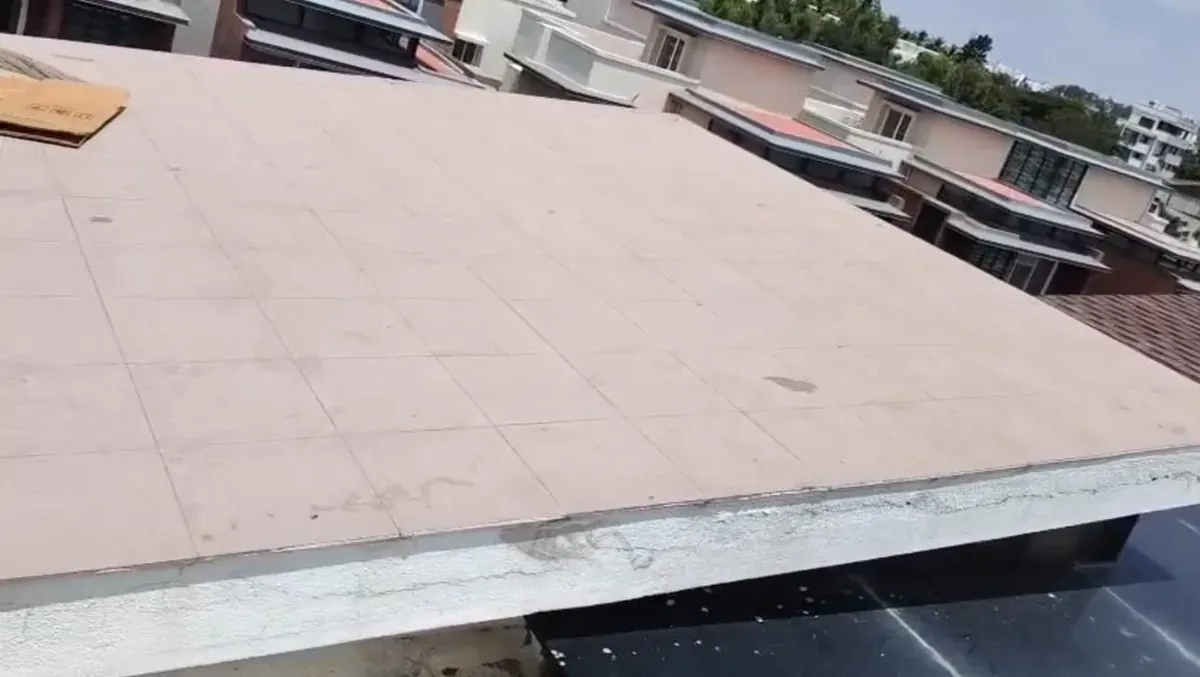
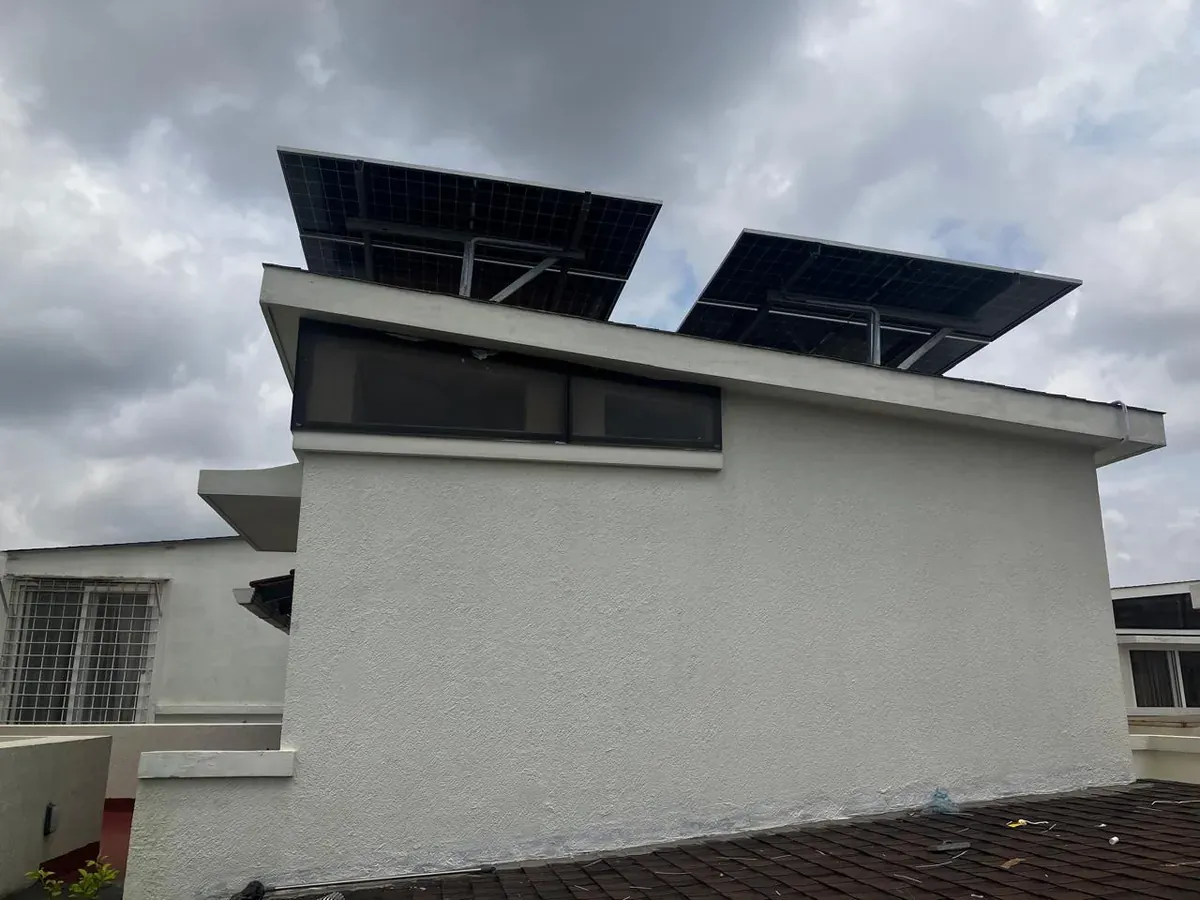
Both homes are new plants, about two months old, in the same villa community on Bannerghatta Road and on the same street. Neither had been cleaned at the time of measurement. The highlighted rows are where the plants differ.
| Item | No coating | Reflective coating |
|---|---|---|
| System size | 6 panels, 3.72 kWp | 6 panels, 3.72 kWp |
| Panels | Adani 620 Wp TOPCon, bifacial | Adani 620 Wp TOPCon, bifacial |
| Inverter | Deye, same make and model | Deye, same make and model |
| Mounting | Parallel to the roof, about 2 ft above it, 5° tilt to the south | |
| Shading | None | None |
| Roof surface | Concrete slab topped with shingles | Concrete slab with tiles |
| Coating | None | White reflective coating (Lumincoat Reflecton) over about 11 ft × 20 ft |
| Location | Same villa community on Bannerghatta Road, same street, Bengaluru | |
| Data period | 1–26 October 2026 (both plants, same dates) | |
| Measured by | Inverter monitoring app (Deye): daily production, plus 5-minute power data for 10 October | |


The results
The two plants rise and fall together day by day, including the cloudier days on 16 and 18 October and 22–25 October, which shows they experienced the same weather. The coated plant was higher on all 26 days, by between 11% and 14% (median 12%).
Show the daily numbers
| Day | No coating (kWh) | Coating (kWh) | Coating vs none |
|---|---|---|---|
| 1 Oct | 16.1 | 18.4 | +14.3% |
| 2 Oct | 20.4 | 22.8 | +11.8% |
| 3 Oct | 20.4 | 22.8 | +11.8% |
| 4 Oct | 19.5 | 22.1 | +13.3% |
| 5 Oct | 14.9 | 17.0 | +14.1% |
| 6 Oct | 20.0 | 22.4 | +12.0% |
| 7 Oct | 18.5 | 21.1 | +14.1% |
| 8 Oct | 19.8 | 21.9 | +10.6% |
| 9 Oct | 15.8 | 17.7 | +12.0% |
| 10 Oct | 21.2 | 23.6 | +11.3% |
| 11 Oct | 20.9 | 23.4 | +12.0% |
| 12 Oct | 19.6 | 21.8 | +11.2% |
| 13 Oct | 20.8 | 23.3 | +12.0% |
| 14 Oct | 18.6 | 20.8 | +11.8% |
| 15 Oct | 16.0 | 18.3 | +14.4% |
| 16 Oct | 8.3 | 9.2 | +10.8% |
| 17 Oct | 17.1 | 19.0 | +11.1% |
| 18 Oct | 8.5 | 9.6 | +12.9% |
| 19 Oct | 20.0 | 22.3 | +11.5% |
| 20 Oct | 17.9 | 20.1 | +12.3% |
| 21 Oct | 15.4 | 17.2 | +11.7% |
| 22 Oct | 9.8 | 11.1 | +13.3% |
| 23 Oct | 10.5 | 11.8 | +12.4% |
| 24 Oct | 9.6 | 10.7 | +11.5% |
| 25 Oct | 11.2 | 12.6 | +12.5% |
| 26 Oct | 17.9 | 20.3 | +13.4% |
| Total | 428.7 | 481.3 | +12.3% |
Hour by hour, 10 October
On 10 October we have 5-minute power data for both plants. The coated plant was ahead in every hour, by about 9–10% around midday, and by more in the early morning and late afternoon (up to about 20%), when the sun is lower. Over the day the gain was 12%, in line with the month. Peak power was about 3.31 kW for the coated plant and 3.05 kW for the uncoated plant.
Computed from 5-minute readings, using only the times both plants reported. Hours with very little output are not labelled. Data for one day only.
What this does and doesn't show
Two things differ between the plants
- Coating: a white reflective coating sends more light back up to the rear side of bifacial panels, and may also keep the roof cooler.
- Surface beneath: the uncoated roof has shingles on the slab and the coated roof has tiles. We cannot separate this from the coating itself.
We did not measure panel temperature or the light reaching the rear of the panels, so we cannot say how much of the gain comes from each mechanism.
Limits of the data
- The daily data covers 26 days in one month; the hour-by-hour view covers one day. Other months may give different results.
- It compares two real homes, not a laboratory test. Both plants are new and had not been cleaned.
- We tested one coating product at one thickness and area, and one mounting height (about 2 ft).
- The figures come from the inverter monitoring app, which may differ slightly from the utility meter.
We will update this page as more months of data come in.
What this means for your roof
For a bifacial system above a roof you can coat, a reflective coating is a way to increase output without adding panels. Whether it pays depends on your roof, the area to coat, the coating cost and how much of your generation you use at home. The extra 52.6 kWh here is about ₹370 over 26 days at ₹7 a unit, so compare that with the cost to coat your own roof.
Our separate raised vs flush mount study looks at mounting height. We have not yet tested a raised structure and a reflective coating together, so don't add the two gains. To size the system itself, see our guide to choosing solar capacity.